

“He is a deceiver! He is a blasphemer! He is an enemy to the Law! He is mentally sick!”
Who am I talking about? Your boss? The in-laws? Let’s hope not! How about Satan? That would be an accurate description. No, I am talking about Jesus! He was accused of all of the above and of much more. Recall that he was even accused of being demon possessed, and of actually being Satan in the flesh. Beelzebub. Think about how much it must have hurt to be falsely accused by those whom he loved and has loved since He created humans beings. That eternal love transcends our comprehension.
It would be reasonable to assume that Jesus Christ, during His human life, was a man of good reputation. But this was not always the case. You have to admit that He did not come to this earth, or leave it, with a stellar reputation. During Jesus Christ’s life He was considered a deceiver, a blasphemer, demonically possessed, and even Satan himself. A man of “no reputation,” no good reputation (Philippians 2:7). How can this be?
Another Example: “He is a criminal! He is a man pleaser, seeking glory from men. He is greedy and an extortioner. He is a cult leader.” Who am I talking about now? All this, and much more, was said of the Apostle Paul.
Surely a good reputation is the primary goal of a true Christian. Yet Christ, the Apostle Paul, and others suffered widespread public dishonor even as they obeyed and taught God’s way. The Bible has quite a bit to say on the subject of reputation. What other people think of you and I is not something that we should treat lightly or flippantly. Being people of good repute is something we are supposed to aim for and not disregard. However, the main issue in our reputation is not so much what they think of us, but what they think of God because of us, both now and in the future.
The definition of reputation is simply “the estimation in which a person or thing is commonly held, whether favorable or not; its character in view of the public.” What is difficult is that what we believe about someone may or may not be who that person truly is. Humans, some far more than others, are especially talented at hiding the real person behind a facade of deception—displaying phony character traits, or lying about another person’s character, for all kinds of reasons.
How do we bridge this seeming discrepancy?
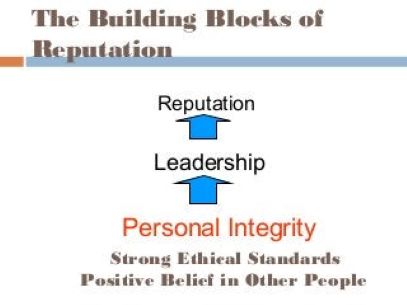
First, a good reputation does matter: “A good name is to be chosen rather than great riches, Loving favor rather than silver and gold,” (Proverbs 22:1). The Hebrew words imply that a “good name” is a mark of good character. We know that character is built over a long time. That’s how we know who a person really is. A good reputation and godly character are built slowly, and not through deceit.
So a good reputation matters for several reasons. Reputation builds respect and trust in a work setting. A good reputation can also help resolve misunderstandings. At school, if you have a reputation for working hard and being consistent, then when the dog does eat your homework – you have an established reputation that can work in your favor.
Problems are prevented by a good reputation. It’s difficult to wrongly accuse someone of doing anything improper, if everyone knows that you live by a certain standard. Paul likened a Christian to serving in the role of an ambassador for Christ. Effective diplomats guard their behavior, character, and reputation very carefully because they are a reflection of their home country’s government.
Maintaining a good reputation comes from scripture:
In Matthew 5:16 ESV, Jesus said: “In the same way, let your light shine before men, that they may see your good deeds and praise your Father in heaven.” And “Keep your conduct among the Gentiles honorable, so that when they speak against you as evildoers, they may see your good deeds and glorify God on the day of visitation” (I Peter 2:12 ESV). God’s people are to react to adversity, or a false reputation, with gentleness and meekness (Philippians 4:5). The fruits of the Spirit listed in Galatians 5: 22-23, are foundational traits that are to be the basis of our reputation; what people know about us.
However, a reputation can be destroyed in this world with scary ease. If you have ever had your credit card number or identity stolen you know how quickly that can happen.
How interesting, then, that a lasting reputation can also be built on how we handle a falsely implied bad reputation in this world. It points to the power of God’s Spirit to change us, and how we think and react. It is often later, when situations fully become known, that people look back and see how someone dealt with a falsely dishonored reputation.
As a result, future generations will see that it is possible, even under extremely challenging conditions, to trust in God. The world around us is unstable with no lasting foundation; we must seek the real world where God exists. Like Christ, we must be willing to be of “no reputation” to this world, waiting for the reward that patience, faithfulness, and hard work will bring.
The definitive mark on us shouldn’t be the development of reputation, but of righteous character that, however God sees fit, points people to Him.
Tim Vail